
.jpg)

ADVERT & SIGNS.
ADVERT & SIGNS.
One of the world’s oldest industries
just think back to the first newspapers. Even today, you’re likely surrounded by printed materials: manuals, books, leaflets, catalogues, brochures, newsletters, bills, documents, and more.
How will your prints stand out among the many neighboring businesses all competing for the same customers?
1. Key Take-aways
-
Match material to use. Opt for vinyl for outdoor ads that withstand Singapore’s heat and rain, fabric for indoor events and photo backdrops, and mesh for blustery locations like open-air markets.
-
Print quality first! Make sure to choose full color, 150 to 300 dpi and premium files and materials to increase brand credibility and visibility.
-
Make it easy to read. Make sure you set the right dimensions including bleed and safe zones. Utilize bold colors and readable fonts. Always approve a digital proof before printing.
-
[TECH PICK] Opt for the proper tech. Digitally printed on vinyl using latex or solvent inks depending on durability requirements, you can contour cut your banner, add a matte or gloss finish, or print double-sided.
-
Adhere to local ordinances. Follow Singapore size, placement, and display duration guidelines. Obtain permits for public spaces and comply with safety signage standards for worksites and events.
-
Consider more than just the print. Include hardware such as retractable stands, grommets, pole pockets, and tension frames. Get integrated with your digital campaigns and choose recyclable or eco-friendly options for a sustainable touch.

1. Choosing Banner Printing Materials
Material choice depends on application, durability, and appearance. Singapore’s heat, UV, rain, and high humidity all come into play, as do wind loads on open sites and cramped in-mall storage.
-
PVC/vinyl: tough, rainproof, strong color pop, easy to clean. It has a heavier feel and is not PVC-free.
-
Fabric (polyester) is soft and crease-resistant. It has PVC-free options, and colors appear vibrant with indoor lighting. It is not great for extended outdoor rain.
-
Mesh is made of perforated vinyl or polyester. Wind goes through it, which reduces stress on grommets. The colors may appear somewhat dulled because of the holes.
Select vinyl for outdoor advertisements exposed to sun and storms. It retains ink beautifully, provides strong, uniform colors, and deflects showers on wallscaping, site hoarding, and roadside banners.
For locations such as Marina Coastal Drive or Sentosa beachfront where gusts get kicked up, utilize mesh to cut wind drag and tearing. Use UV-stable inks and edge welding for stress points. If you’re printing for long runs or reuse, we will add a matte laminate to block scuffs, slow fade, and make cleanup quicker after haze or salty air.
Plan weight is 440 gsm for most street banners and 510 gsm for longer spans or frequent relocation.
Use fabric banners indoors where you want a calm, high-end feel: hotel ballrooms, retail pop-ups, or trade shows at Expo. The soft weave kills glare in photos and reads well under LEDs.
Dye-sub on polyester yields smooth gradients for portraits and product shots. Flame-retardant grades suit malls and events. Wrinkle-resistant knits fold small for MRT travel and quick setups.
For semi-outdoor but covered corridors, pair fabric with a light frame and keep edges taped to avoid fray.
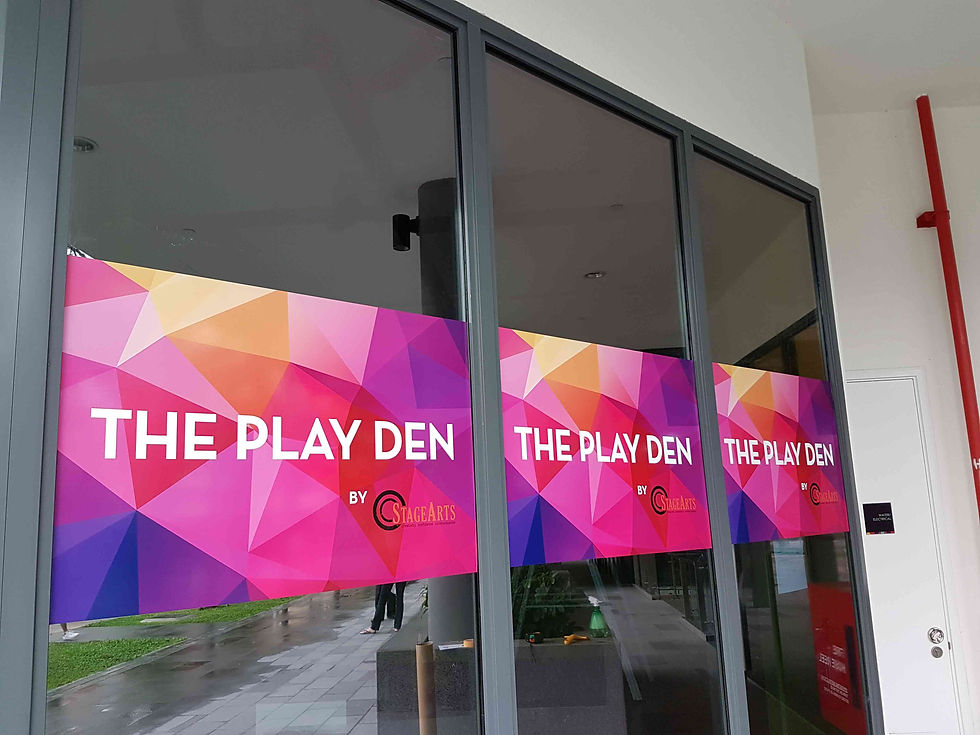
For trim jobs, consider adhesive vinyl, canvas, and paper backdrops. Window graphics: opt for removable adhesive vinyl. Choose clear for see-through promos or white block-out for bold art.
Add laminate for cleaning with mild soap. Product photography: matte canvas or poly-cotton blends cut glare and give fine texture. Use 1.5 to 2 meter widths for tabletop sets.
Retail displays: heavyweight poster paper gives sharp text on a budget. Swap monthly. For longer terms, PVC-free polyester film is flatter and more eco-friendly.
2. Why Banner Quality Matters
Quality forms the snap decision people take as they stroll by. In Singapore’s crowded streets and shop malls, a banner is usually the first physical touchpoint, and a good one establishes the mood for the entire brand interaction.
Invest in high quality prints and premium materials to ensure maximum brand exposure and professional visual impact.
High-quality PVC or polyester fabric with neat hems and sturdy eyelets retains form and appears crisp, even in steamy air. A quality finish, smooth edges, tight stitching, and true blacks makes that first impression land. Visitors decide in something like 7 seconds, so a crisp build and clear layout count.
Studies indicate that around 76% of adults walk into a store they had never been in due to its sign. That’s the sort of lift premium banners can create at a mall atrium in Orchard or a trade show booth at Marina Bay Sands.
Choose full colour printing and advanced printing technology for sharp graphics and vivid images that attract attention.
Full color, high DPI, great color profiles lock in skin tones, brand reds, and fine lines. We use latex or UV printers to keep gradients clean and small type readable from a couple meters away. A quality banner can communicate your brand’s identity in an instant.
Consider a crisp hero image, concise tagline, and obvious call-to-action that visitors can read while on the move.
Opt for durable banners with resistant inks and weatherproof finishes for long-lasting outdoor use in Singapore’s climate.
Heat, rain and sun test signs here. UV-resistant inks, laminated or coated finishes, and rust-proof grommets battle fade and wear. Banner quality includes wind slits and reinforced corners that keep outdoor banners firm at roadside sites or HDB courtyards.
That saves reprints and keeps colors true over weeks, not days.
Recognize that superior banner quality enhances brand credibility and increases the effectiveness of marketing campaigns.
Better build shouts quality, which boosts confidence and devotion. In a crowded marketplace, the little things make a difference. Premium banners ensure you pop up and remain visible.

3. Preparing Your Printing Design
File setup, size, color and type, and proofing are essential steps. Pair each option with where your banner will reside in Singapore’s heat, rain, and dappled light, from mall atriums to void decks and outdoor fences.
Upload artwork in accepted file formats (e.g., PDF, AI, EPS) and ensure high resolution (at least 150-300 dpi) for crisp, clear prints.
Export print-ready PDFs with fonts outlined and images embedded. Remember to keep raster photos at 300 dpi at final size, although 150 dpi can be okay for very large outdoor pieces where the viewer is far away. Prepare your banner design using ai or eps for logos and icons, as vector remains crisp on large formats at MRT entrances or trade halls.
Make sure to label layers and files clearly and stay in CMYK color. If you require spot brand colors, please provide Pantone codes and a sample print.
Set correct banner size and dimensions to match your display requirements, considering bleed and safe zones for important content.
Start with the site: wall width, ceiling height, wind, sun, and distance. For lamp-post wraps or school fences, check panel restrictions with the venue. Include bleed for hems and grommets and maintain a 1 inch (2.5 cm) margin inside the safe zone so that no text is trimmed.
Leave space for rope, zip ties, or pole pockets. If using a mall lightbox, request the literal frame bite.
Incorporate bold colours, readable fonts, and high contrast graphics to maximize visibility from a distance.
Keep to 2–3 main colors for bright clean impact. Opt for high contrast pairs, dark navy on white and black on yellow, so copy reads in glare. Use one strong headline face with a simpler body face.
Keep word count lean and include a nice CTA like Visit Us Today or Order Now. Take advantage of this by using vector logos and high-resolution images, and avoid pixel blur on big storefront drops.
Review digital proof before printing to confirm design accuracy, alignment, and overall layout.
Don’t forget to verify trim, bleed, grommet marks and scale. Zoom to 100% to catch soft images and typos. Check alignment, CMYK builds and CTA placement.
Give your banner one last once-over. Spotting mistakes now saves you time and money down the road!

4. The Vinyl Printing Process
Vinyl printing converts your design into a long-lasting banner, wrap, or decal that withstands Singapore’s sun, rain, and wind. We strive for pristine color, crisp detail, and durable wear for indoor malls or outdoor facades on Orchard Road, hawker centers, and event sites.
Utilize digital vinyl printing techniques for efficient production of large format banners, vehicle wraps, and vinyl decals.
Digital printing is for quick turnarounds and mixed artwork with gradients or photographs. It gleams on short runs, so a one-off event backdrop or a limited batch of in-store promos remain budget-friendly.
To put it in perspective, that’s wall-sized backdrops at 3 meters wide, full van wraps, or shop window decal kits. Rolls are frequently 3.6 meters or less in length, which makes storage easy and reduces waste.
Select the appropriate printer and ink type, such as latex inks or solvent inks, based on application and longevity needs.
Latex cures at lower heat, has low odor, and is appropriate for indoor venues such as retail locations and schools. Solvent or eco-solvent inks bite into the vinyl for tougher outdoor use, which is useful for roadside banners and fleet wraps in humid, salty air.
Match the vinyl: a three-layered (scrim) banner stock holds shape in heavy rain and gusts and resists curl on long spans.
1. Preflight artwork and size;
-
Choose material and ink;
-
Print and cure;
-
Finish;
-
Inspect and pack.
-
Check color, bleed, fonts, and final size.
-
Choose 3-layered vinyl for weather. Select latex or solvent for longevity and vibrancy.
-
Print, then cure so inks set and colors stay true.
-
Hem edges to stop fray, add grommets, or weld pockets.
-
Check seams, color, and trim pack flat or on core.
Explore customization options like contour cutting, gloss or matte finishes, and double-sided prints for versatile marketing solutions.
Contour cut decals for glass panels. Glossy pops under mall lighting, matte eliminates glare in sunlit atriums. Two-sided prints assist overhead signs at MRT-linked malls.
For method, digital is used for short runs, screen printing is used for thick, bold color, and offset is used for large, consistent batches. Weather, durability, and color fidelity inform the ultimate decision.

5. Conclusion
Banners do real work in Singapore. Clear type. Vibrant color. Clean finish. Sun, wind and rain put each job to the test, from a void deck fair to a Bugis pop-up. Good stock and crisp print stand up. Intelligent file preparation saves you time. Reinforced hems and iron eyelets prevent rips. Easy victories on a busy street.
Laws around here remain rigid. Just the right size. Spot on! Just right permit bypass penalties and holdups. Of course, a neat install keeps people safe.
If I had seen it pay off. Tiong Bahru hawker used a snappy tagline and a luminous 2 m vinyl. The lunch crowd doubled that week. Not luck. Just right for the location and objective.
Want assistance to size, prep and print your banner in Singapore. Get in touch. Banner printing. Let’s make it live.

Frequently Asked Questions
What banner material works best for Singapore’s weather?
PVC vinyl is your best bet. Opt for 440 to 510 gsm for outdoor resilience. For windy sites, use mesh vinyl to reduce wind load. For high-end indoor displays, select smooth blockout vinyl. All hold up well in Singapore’s heat and humidity with the right finishing.
Why does banner print quality matter?
These high-resolution prints look crisp, even from a distance and close-up. Top inks are UV fade and rain resistant. Strong finishes keep them from tearing. Better quality leads to longer life, fewer reprints, and a more professional brand image.
How do I prepare my banner file?
Artwork at full size with 150 to 300 dpi. Go CMYK. Add 50 mm bleed to all sides. Remember to have your main copy at least 50 mm away from edges. Outline fonts and embed images. Export as PDF/X-1a for optimal print reliability.
What’s the standard vinyl printing process?
Your file is verified and color-matched, then printed on eco-solvent or UV machines. The print is cured, laminated if necessary, cut to size, and completed with hems and grommets. Quality control occurs at every stage to maintain uniformity.
Do I need approval to display banners in Singapore?
For the public areas, you may require permits from LTA, HDB or Town Councils. Condo MCSTs and malls have their own regulations. Don’t forget to verify placement approvals, size restrictions and display durations prior to printing.
What sizes are common for event banners?
Common sizes are 2.0 m by 1.0 m, 3.0 m by 1.0 m, and 6.0 m by 1.0 m for roadshows. For backdrops, 3.0 m by 2.3 m or 6.0 m by 3.0 m are typical. Size always coordinates viewing distance and venue maximums.
What else should I plan beyond printing?
Consider installation, permits, and hardware. Use rope, cable ties, or bungee cords. Reinforced hems and grommetting occur every 500 mm. Coordinate site checks, wind, and removal dates. Leave extra banners for fast switches.