
Retail Signage Singapore: How to Design Signs That Drive More Customers Into Your Store


The Science Behind Why Retail Signage Moves People
A customer's decision to enter a retail store or pass by is made in approximately 2–3 seconds. In that window, they absorb your shopfront sign, your window display, and a general impression of what kind of business you are. Signage controls all three of these inputs.
In Singapore's competitive retail environment — whether you are trading in a heartland neighbourhood centre, a suburban mall, or an Orchard Road flagship — your signage is not decoration. It is your primary conversion tool before the sale begins.
The Three Layers of Effective Retail Signage
Layer 1: Shopfront Identity Signage
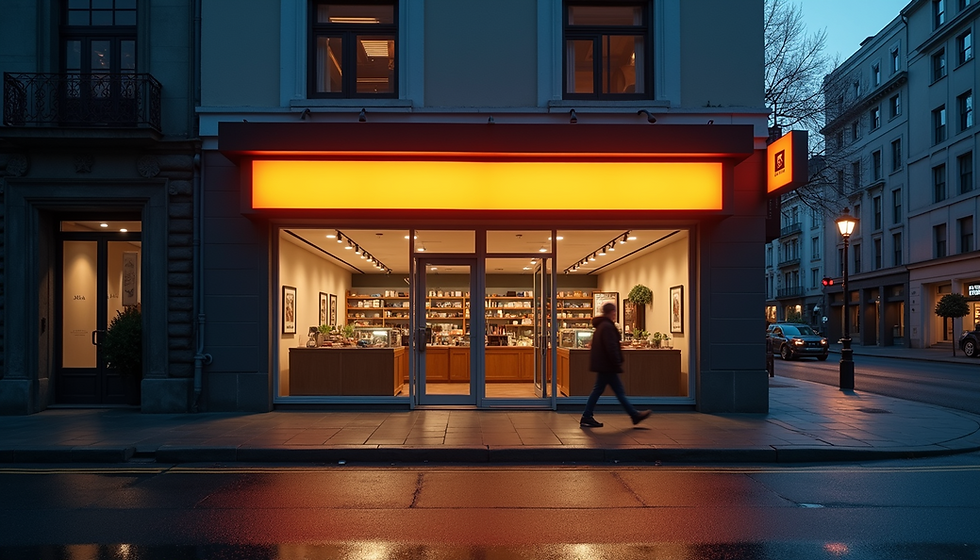
This is your business name and visual identity displayed at the entrance. Its job is identification and positioning — it tells customers who you are and what category of business they are looking at. The three questions it must answer in two seconds: What is this place? Is it relevant to me? Does it look like somewhere I want to go?
For most Singapore retail businesses, this means a well-executed combination of 3D lettering or a lightbox, displaying the brand name clearly, in the right scale for the shopfront width, using materials and finishes consistent with the brand positioning.
Layer 2: Promotional and Window Signage
Once customers are engaged enough to approach, window graphics, promotional panels, and in-window displays communicate specific offers, seasonal promotions, new arrivals, and reasons to enter now. This layer converts casual attention into a decision to enter.
Effective window signage in Singapore: vinyl decals and frosted film for permanent brand messaging, removable window graphics for rotating promotions, LED displays for high-visibility promotional content, and window merchandise displays backed by promotional text panels.
Layer 3: Interior Directional and Point-of-Sale Signage
Inside the store, signage guides movement, communicates pricing and product information, and creates the visual environment that influences purchase decisions. Poorly organised interior signage creates confusion and undermines dwell time. Well-designed interior signage creates a journey through the store.
Signage by Retail Category
Fashion and Apparel
Minimalist, brand-first. The signage itself should not compete with the merchandise — it should frame it. Typically: brushed metal or acrylic shopfront letters, frosted window film for privacy/brand messaging, minimal interior directional signs, and clear pricing panels at point of sale.
F&B and Cafes
The most signage-intensive retail category. Menu boards (printed, chalkboard, or digital), shopfront identity sign, window promotions, interior atmosphere neon or 3D elements, loyalty programme displays, and social media call-to-action panels all coexist in a well-designed F&B space. Hierarchy matters — if everything competes for attention, nothing wins.
Electronics and Tech Retail
Clear product identification, high-contrast promotional price panels, illuminated feature zones for hero products, and digital displays for specifications and comparisons. Customers in tech retail are information-driven — signage that delivers information efficiently builds confidence.
Pharmacies and Health Stores
Category navigation signage (directing customers to relevant product zones) is the primary priority. Clear, legible, and consistent zone identification reduces search time and improves the shopping experience significantly. Pharmacy counters require specific licensed signage for prescription and dispensary areas.
Heartland SME Retail
Clarity and legibility take priority over aesthetic sophistication. Customers in heartland areas — neighbourhood centres, coffeeshop complexes, wet market areas — are habitual and local. The signboard needs to identify the business clearly, be readable from across the walkway, and ideally communicate the key product or price proposition on the signboard itself.
Singapore Mall Tenant Signage: Special Considerations
Mall tenants in Singapore face an additional layer of signage governance. Each mall management has its own tenant signage guidelines specifying:
• Maximum sign area (usually expressed as a percentage of the shopfront width)
• Approved materials and finishes (some malls prohibit certain colours or finishes to maintain visual coherence)
• Illumination types and brightness levels
• Prohibition of animated or flashing signs in some contexts
• Required clearance from mall corridors (safety and visibility)
Mall signage guidelines are obtained from the mall's tenancy management office. Your signage company should review these guidelines before designing your sign — submitting a non-compliant design for mall approval results in delays and redesign costs.
Retail Signage Costs in Singapore (2026)
Signage Type / Service | Estimated Cost (SGD) |
Shopfront 3D acrylic letters (per project) | $400 – $2,000 |
Shopfront lightbox (1.5m – 3m wide) | $600 – $1,800 |
Window vinyl decal graphics (per sqm) | $30 – $80 per sqm |
Frosted window film (per sqm) | $20 – $50 per sqm |
Interior directional sign (per piece) | $80 – $300 |
Printed promotional banner (per sqm) | $15 – $40 per sqm |
LED digital menu board (per screen) | $600 – $2,500 |
Point-of-sale display stand | $150 – $600 |
Frequently Asked Questions
How important is signage for a Singapore mall tenant vs a street-level shop?
Both are important but serve slightly different functions. A street-level shop must attract passing traffic with its signboard — the signboard is doing the work that a mall directory and foot traffic do for a mall tenant. For mall tenants, internal wayfinding and promotional displays may matter more than the shopfront sign alone. Both contexts require professional, on-brand execution.
Should I use a digital menu board or a printed menu board?
Digital menu boards offer flexibility for changing prices and promotions without reprinting, and are more visually dynamic. However, they carry higher initial cost, require content management, and need power connectivity. For high-volume F&B where promotions change frequently, digital is worth the investment. For a stable menu with few changes, a high-quality printed or backlit menu board is more cost-effective.
Can I put promotional stickers on my shop window in Singapore?
Window graphics visible from the exterior of the premises technically fall within BCA's outdoor signage framework. In practice, promotional vinyl decals and window stickers are very common and their licensing treatment depends on whether they are classified as advertisements or shopfront identification. Consult with a signage company on the specific application.
Ready to Get Started? Talk to Advert & Signs Today
Advert & Signs (www.advertandsigns.com) is a custom signage specialist based in Singapore, serving businesses across all industries — from F&B hawker stalls and retail shopfronts to corporate offices and industrial facilities. Every project starts with a listening session, not a sales pitch. The team guides you from concept through to fabrication and installation, with a WOW-factor guarantee built into every job.
WhatsApp or call Advert & Signs at 9862 5243 for a free site consultation and quotation. Located at 16C Tuas Ave 1, #09-53 JTC Space @ Tuas, Singapore 639535. Visit www.advertandsigns.com to view the full portfolio.


Comments